
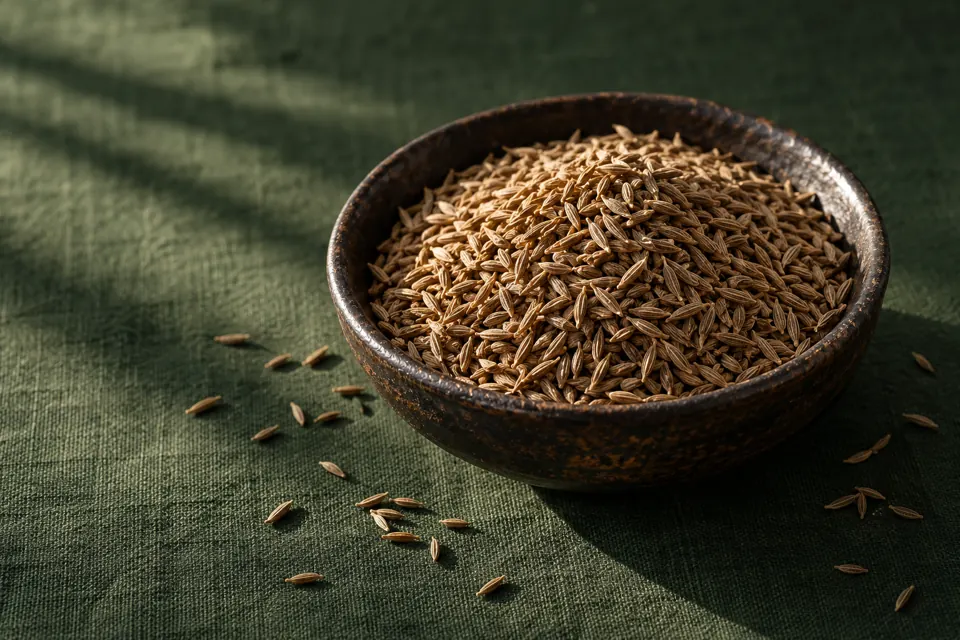
1. Botanical Identity & Linguistic Names Across Cultures
If you have ever wondered while following a recipe whether you should buy jeera or cumin seeds, they are 100% the same botanical ingredient. The dried seed comes from Cuminum cyminum, an annual herbaceous plant native to the arid desert belt extending from the Eastern Mediterranean to the Thar Desert of Northwestern India.
Across Indian languages, the spice is known by various phonetic terms rooted in Sanskrit Jīraka (meaning 'that which aids digestion'):
- Hindi & Urdu: Jeera / Zeera (ज़ीरा / زیرہ)
- Gujarati: Jeeru (જીરું)
- Marathi: Jire (जिरे)
- Bengali: Jira (জিরা)
- Tamil: Seeragam (சீரகம்)
- Telugu: Jeelakarra (జీలకర్ర)
- Kannada: Jeerige (ಜೀರಿಗೆ)
- Malayalam: Jeerakam (ജീരകം)
2. Why Single-Origin Terroir Matters More Than the Name
While the word 'cumin' and 'jeera' describe the same seed, the potency, flavor profile, and volatile oil density vary drastically depending on where the crop was cultivated.
Over 80% of India's highest quality cumin is cultivated in the arid, mineral-rich soils of Western Rajasthan, specifically around the Barmer desert district. The extreme temperature variations (warm desert sun by day, crisp cold desert nights) stress the plant into producing 3.5% to 4.2% volatile essential oils (primarily cuminaldehyde, pinene, and terpineol). In contrast, commercial cumin from humid regions or blended mass-market imports rarely exceeds 1.5% to 2.0% volatile oil.
3. Whole Sabut Jeera vs Pre-Packaged Cumin Powder
The real distinction in everyday cooking is not between the words cumin and jeera, but between whole seeds (sabut) and pre-ground powder (pisa jeera):
- Whole Cumin Seeds (Sabut Jeera): The seed coat acts as a microscopic hermetic seal. When kept whole, the volatile essential oils remain protected against oxygen and moisture for up to 12 months. When dropped in hot ghee or oil, the heat bursts this shell, infusing the cooking fat with pure aroma.
- Pre-Packaged Cumin Powder: Once milled in industrial steel grinders, friction heat degrades fragile aromatic terpenes. Within 3 to 4 weeks on retail shelves, commercial cumin powder oxidizes, losing over half of its flavor punch.
4. Direct Comparison Table
| Attribute | Authentic Whole Barmer Jeera | Standard Supermarket Cumin | Commercial Cumin Powder |
|---|---|---|---|
| Volatile Oil % | 3.5% – 4.2% (High) | 1.5% – 2.0% (Medium-Low) | <0.8% (Oxidized) |
| Polish & Additives | 0% Polish, Sun-Dried | Often chemically oiled for shine | May contain anti-caking fillers |
| Best Culinary Use | Dal tadka, jeera rice, detox water | General cooking | Curry gravies (mixed with paste) |
| Aroma Retention | 12 Months in airtight jar | 4–6 Months | 3–4 Weeks |
5. How to Cook with Whole Cumin Seeds
To experience the full potential of single-origin cumin:
- Tempering (Tadka): Heat ghee to 160°C–170°C, add 1 tsp whole seeds, let them sizzle for 5–7 seconds until fragrant golden brown before adding aromatics.
- Homemade Bhuna Jeera: Dry-roast seeds in a cast iron pan over low flame for 3–4 minutes until smoky and dark mahogany; crush coarsely in a mortar.
- Morning Cumin Water: Soak 1 tsp whole seeds overnight in water, simmer for 3 minutes, and drink warm for digestive wellness.
Buy 100% Pure Barmer Whole Cumin
Single-origin, sun-dried, unpolished whole jeera seeds directly from Barmer, Rajasthan. Uniform pricing at ₹60 per 100g across all pack sizes.
Frequently Asked Questions
Is jeera and cumin seeds the exact same spice?
Yes. Cumin seeds and jeera are identical botanical spices (Cuminum cyminum). "Jeera" is the Indian/Hindi/Urdu word, while "Cumin" is the English term used globally.
Can I substitute ground cumin powder for whole jeera in Indian recipes?
In tadka (hot oil tempering), whole jeera cannot be substituted with ground powder because powder burns instantly in hot ghee and turns bitter. However, ground cumin can be substituted in spice rubs and curries when mixed with wet pastes.
Why do Indian chefs prefer whole Barmer jeera over supermarket cumin?
Barmer jeera from Western Rajasthan contains 3.5% to 4.2% volatile essential oils compared to less than 2% in generic supermarket cumin, delivering far richer aroma, superior crackle in fat, and deeper earthy flavour.