
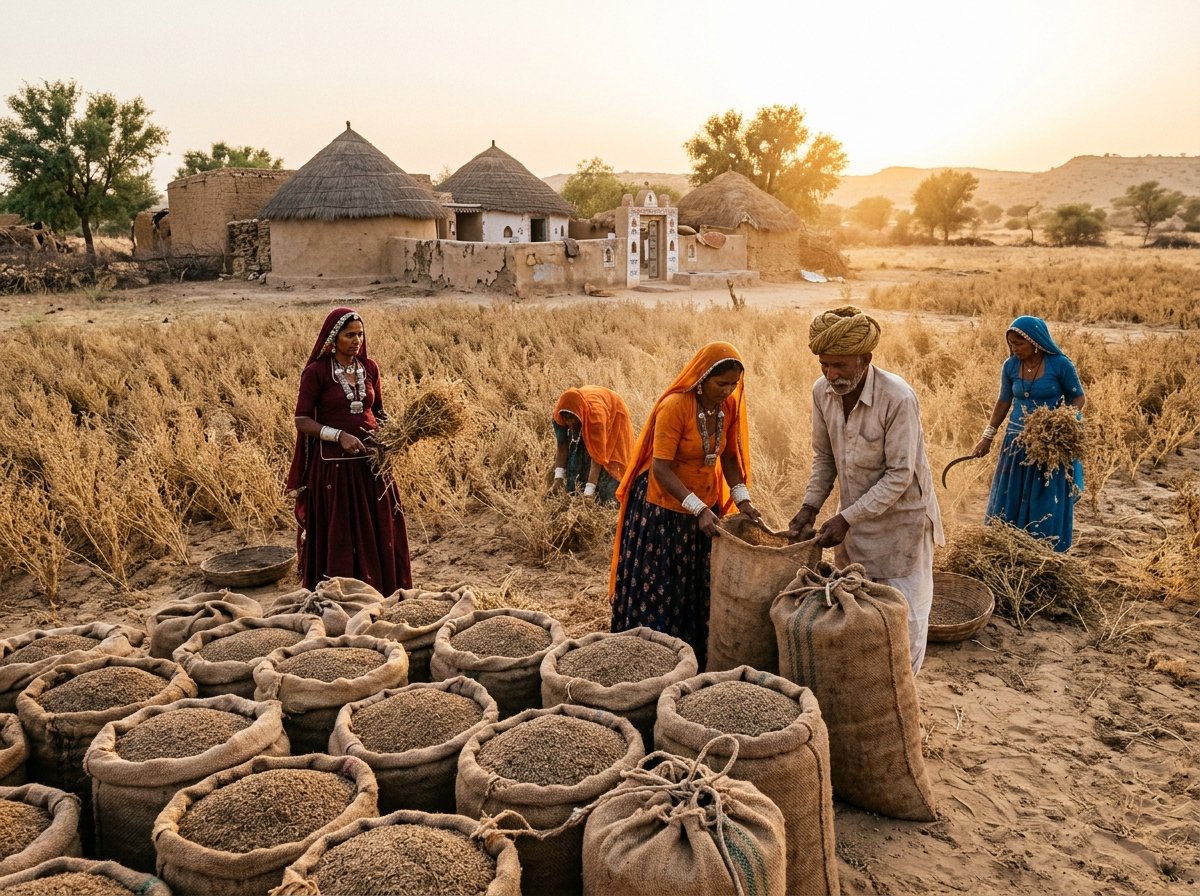
1. The 4 Environmental Factors of Thar Terroir
In agriculture, 'terroir' refers to the combined influence of soil chemistry, climate, and topography on a crop's biochemical composition. The cumin plants grown in Barmer, Rajasthan benefit from four distinct factors:
- Arid Alkaline Sandy Loam: Desert soil with exceptional drainage forces the root system deep into the earth to draw mineral nutrients without excess water saturation.
- Extreme Diurnal Temperature Fluctuations: Crisp desert nights (down to 4°C–8°C in winter) alternating with intense daytime sun stimulate secondary metabolite production in seed pods.
- Arid Low-Humidity Ripening: Because harvest occurs in early spring when air humidity is below 20%, seeds mature without fungal decay or moisture absorption.
- Traditional Sun-Drying: Seeds are dried naturally under direct sun, locking enzymatic volatile lipids firmly inside the kernel.
2. Chemical Breakdown of Barmer Cumin Volatile Oils
Gas chromatography-mass spectrometry (GC-MS) analysis of genuine Barmer cumin reveals four primary bioactive terpenes:
- Cuminaldehyde (38%–45%): The dominant aromatic compound responsible for warm, sweet, pungent cumin aroma.
- p-Cymene (18%–24%): Provides the earthy, woody undertone and natural antimicrobial qualities.
- Gamma-Terpinene (15%–20%): Contributes subtle herbal freshness and antioxidant stability.
- Beta-Pinene (8%–12%): Imparts the characteristic piney, crackling burst upon initial heat contact in fat.
3. Lab Test Comparison Table
| Parameter | Barmer Thar Desert Crop | Standard Commercial Cumin |
|---|---|---|
| Total Volatile Oil (v/w) | 3.5% – 4.2% | 1.4% – 2.0% |
| Cuminaldehyde Concentration | High (Dominant aroma) | Moderate to Low |
| Moisture Content | <7.0% (Crisp & Dry) | 9.0% – 11.5% |
| Foreign Matter / Stones | 0% (Air-Cleaned) | Often contains dust / stems |
4. What This Means in Your Daily Kitchen
Because Barmer jeera is significantly denser in volatile oils, a simple 0.5 teaspoon measure releases more aromatic potency than 1 full teaspoon of supermarket cumin. When tempered in hot ghee, the seeds burst cleanly, creating a rich, restaurant-grade perfume in dal, gravies, and rice.
Experience Real High-Oil Barmer Cumin
Direct from the Thar desert. High essential oils, intense tadka aroma, and 100% unpolished whole seeds in 250g, 500g, and 1kg sealed pouches.
Frequently Asked Questions
What is the volatile oil percentage in Barmer jeera compared to standard cumin?
Barmer jeera tests between 3.5% and 4.2% volatile essential oil content, whereas standard mass-market commercial cumin typically averages between 1.5% and 2.0%.
What chemical compounds give Barmer cumin its distinct aroma?
The intense aroma is driven primarily by cuminaldehyde (4-isopropylbenzaldehyde), supported by p-cymene, gamma-terpinene, and beta-pinene, concentrated naturally by desert climatic stress.