
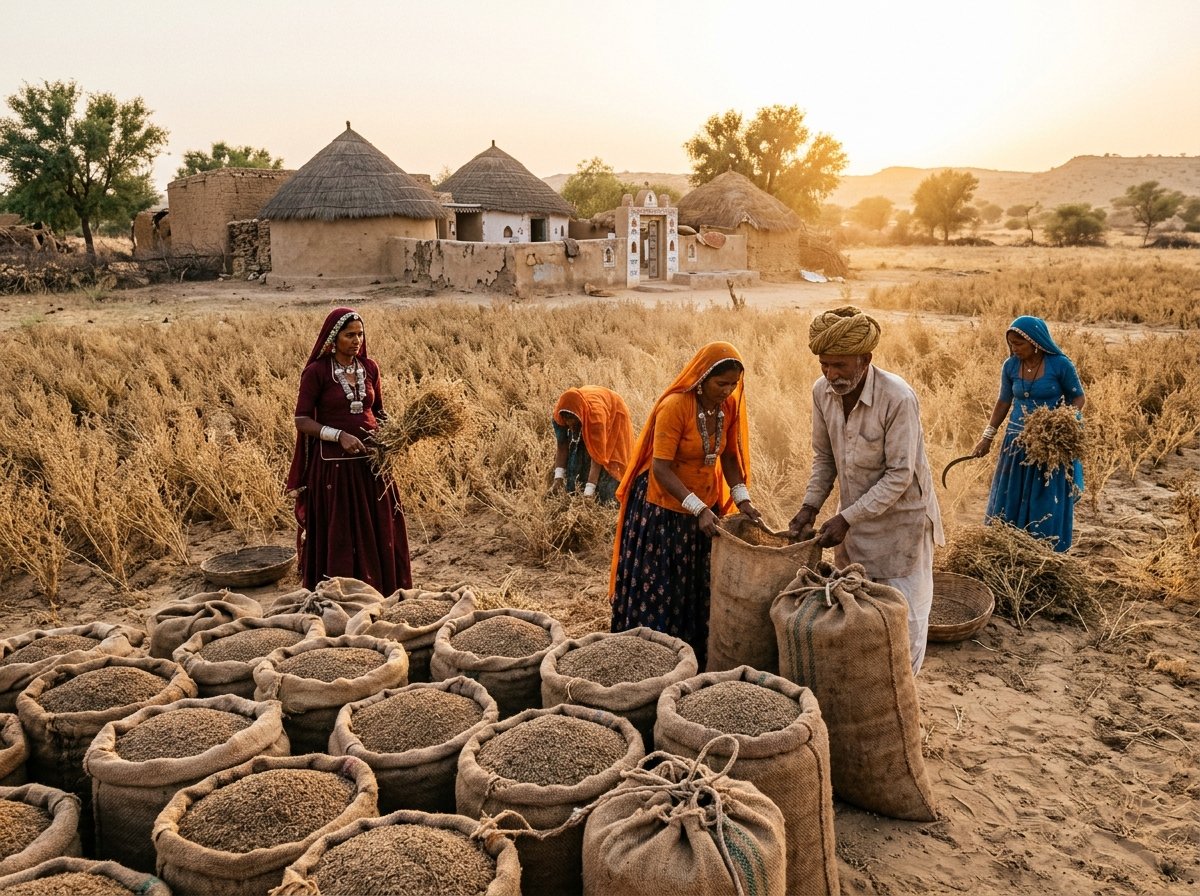
1. Why Bareilly kitchens choose whole jeera
Bareilly's cooking is home cooking — no famous street dish, no festival speciality, just the daily rhythm of dal, sabzi, roti and rice done well. That is exactly where jeera matters most: when there is nothing fancy on the plate, the tempering is the flavour. A fresh whole seed in hot oil is the difference between a dal you remember and a dal you forget.
No famous street dish, no festival speciality — just dal, sabzi, roti and rice done well, every day. When there is nothing fancy on the plate, the tempering is the flavour, and a fresh whole seed in hot oil is the difference between a dal you remember and one you forget. The honest label: Barmer Jeera is natural farm-procured cumin from Barmer, not certified organic, and we do not claim it is.
2. Bareilly dishes that love jeera
Tehri is the one-pot dish Bareilly cooks most on busy days: rice and potatoes together with a tempering of jeera, bay leaf and green chilli, finished with lemon. Kachori with aloo sabzi is the weekend breakfast, the sabzi tempered with jeera and hing in mustard oil.
Dal is the daily constant — toor or moong dal with a jeera-garlic tadka poured over at serving, eaten with roti, rice, or both. In winter, kadhi and heavier sabzis appear, and the jeera use rises with them. Roasting a spoonful on a dry tawa each week and grinding it for chaat, raita and sabzis keeps the powder fresh.
3. Storing jeera in Bareilly climate
The UP plain gives Bareilly hot summers, a heavy monsoon and foggy winters, and whole jeera handles all of it in an airtight jar. Glass with a rubber seal, or a steel dabba with a snug lid, in a cool, dark cupboard away from the stove. Sunlight and steam are what age it fastest.
Wet months are for small packs: 250g, used up while the aroma is still fresh. When the dry winter comes, a 500g pack stores perfectly well in a good jar.
4. What a pack costs, and how it reaches you
| Pack size | Price | Good for |
|---|---|---|
| 100g | ₹60 | Trying it out, or a small household |
| 250g | ₹150 | A month of daily tadkas |
| 500g | ₹300 | Regular family cooking |
| 1kg | ₹600 | Heavy use, or sharing with family |
Courier charges are extra and confirmed on WhatsApp before dispatch.
₹60 buys the 100g pack, ₹150 the 250g, ₹300 the 500g and ₹600 the kilo — courier extra, confirmed before dispatch. Message +91 98287 52934 on WhatsApp with your pack size and Bareilly PIN code. Barmer Jeera operates under FSSAI Food Registration No. 22226007001690.
Order Natural Barmer Whole Cumin
Whole cumin from Barmer, Rajasthan, packed in sealed airtight pouches in 100g, 250g, 500g and 1kg sizes. Courier charges extra.
5. Everyday use: one easy idea
Heat a spoon of ghee or oil, crackle a teaspoon of whole jeera, add a dried red chilli, and pour it over cooked dal just before serving. A traditional kitchen step, not a treatment — it makes no health promise.
One more note: this article is general food information only, not medical advice, and it promises no health result. If you have a health condition, please speak to a doctor before changing your diet.
Frequently Asked Questions
Is Barmer Jeera certified organic?
No. Barmer Jeera is natural farm-procured whole cumin from Barmer, Rajasthan. It is not certified organic, and we do not claim that it is.
How much does organic jeera cost in Bareilly?
Packs are 100g for ₹60, 250g for ₹150, 500g for ₹300 and 1kg for ₹600. Courier charges are extra and confirmed on WhatsApp before dispatch.
How do I order jeera in Bareilly?
Message us on WhatsApp at +91 98287 52934 with your pack size and your Bareilly PIN code. We confirm the courier charge, then pack and dispatch your order by courier.
How should I store jeera in Bareilly?
Keep it in an airtight glass jar or a snug steel dabba in a cool, dark cupboard, away from stove steam and sunlight. Bareilly's heavy monsoon rewards smaller packs — a 250g pack finished fresh beats a kilo kept open through the damp season.