
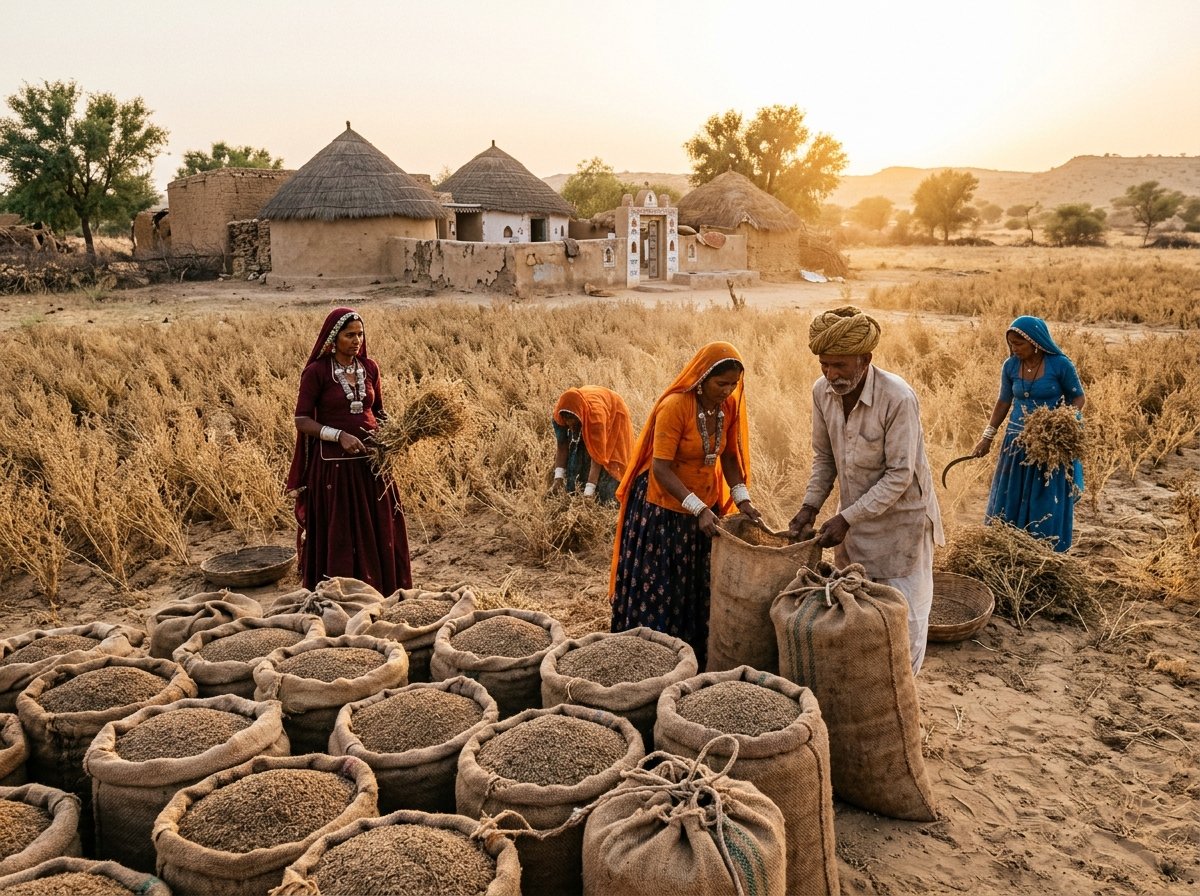
Guntur is famous across India for its chillies, and the food here is bold, spicy and full of flavour. But even in a kitchen built around red chillies, jeera has its place: it goes into the tempering of pappu, into pulihora, and into the pachadi that sits beside every meal.
Let us be clear from the start: this is natural, farm-procured whole cumin from Barmer, Rajasthan. It is unpolished and sun-dried, but it is not certified organic, and we never claim that it is.
In a chilli city, jeera still earns its place
Pappu charu, the thin dal rasam of Andhra homes, uses crushed jeera with pepper and garlic — the cumin is what keeps the heat rounded rather than sharp. Pulihora, the tamarind rice, starts with a tempering of jeera, mustard and peanuts. Gongura pachadi, the sour-leaf chutney Guntur is known for, is tempered with jeera and mustard, and the biryani served at family functions uses whole cumin in the rice. Even a simple pesarattu breakfast is often served with ginger chutney that carries a little roasted jeera. When every dish is this strongly flavoured, a weak or stale cumin simply vanishes — a fresh one holds its ground.
Tempering Andhra-style: hot oil, quick crackle, no burning
For Andhra tempering, heat oil until it shimmers, add half a teaspoon of whole jeera, and let it crackle before the mustard and curry leaves go in — the whole sequence takes under a minute, and the order matters. For pulihora, the tempering is the dish: jeera, mustard, chana dal, peanuts and dry red chillies fried in oil and mixed into tamarind rice. For roasted jeera powder, dry-roast a small batch on low heat until it darkens a shade, cool it fully, and grind it coarse. Use it within a few weeks, because ground cumin loses its edge faster in hot weather.
Hot and humid: keeping Guntur jeera fresh
Guntur's heat and humidity punish a loose lid. Tuck the seeds into an airtight tin or a glass jar with a lid that fits, on a shaded shelf away from the stove. Never scoop with a wet spoon, never leave it open by the sink. Smaller packs stay fresher here, so the 250g or 500g is the usual daily choice.
How to order in Guntur
Send a WhatsApp message to +91 98287 52934 with the pack size you want and your full address with PIN code. We confirm the order and the courier charge on WhatsApp, then dispatch your pack by courier. Prices are ₹60 for 100g, ₹150 for 250g, ₹300 for 500g and ₹600 for 1kg; courier charges are extra and depend on your PIN code.
| Pack size | Price | Best for |
|---|---|---|
| 100g trial pack | ₹60 | Trying Barmer jeera for the first time |
| 250g | ₹150 | Singles, couples, and small families |
| 500g | ₹300 | Everyday cooking for a family of four |
| 1kg | ₹600 | Large families and daily heavy use |
Courier charges are extra; we confirm the exact amount on WhatsApp before dispatch.
Order Lab-Pure Barmer Whole Cumin
Guaranteed 0% chemical polish, single-origin Thar desert harvest, and intense aroma. Packed in sealed airtight pouches in 250g, 500g, and 1kg sizes.
Frequently Asked Questions
Is Barmer Jeera really organic?
It is natural, not certified organic. Barmer Jeera is farm-procured whole cumin from Barmer, Rajasthan, unpolished and sun-dried — but it carries no organic certificate, so we never call it certified. If you want certified organic cumin, please buy from a certified organic seller.
What is the ordering process for Guntur?
Send a WhatsApp message to +91 98287 52934 with the pack size you want and your full address with PIN code. We confirm your order and the courier charge on WhatsApp, then dispatch your pack by courier. Courier delivery covers Guntur, and courier charges are extra.
Which pack sizes are available and what do they cost?
Four sizes: 100g for ₹60, 250g for ₹150, 500g for ₹300, and 1kg for ₹600. The prices are the same across India, and courier charges are extra. Barmer Jeera operates under FSSAI Food Registration No. 22226007001690.
How is jeera used in Guntur pulihora?
Pulihora starts with a tempering of whole jeera, mustard, chana dal, peanuts and dry red chillies fried in hot oil, then mixed into tamarind rice. Whole Barmer jeera works well for this because it crackles cleanly and gives the rice its warm, earthy base note.
A note on the home uses mentioned here: jeera water and similar traditional practices are general kitchen information, not medical advice. For any health condition, please consult a qualified doctor before trying a home remedy.