
1. Why Jodhpur kitchens choose whole jeera
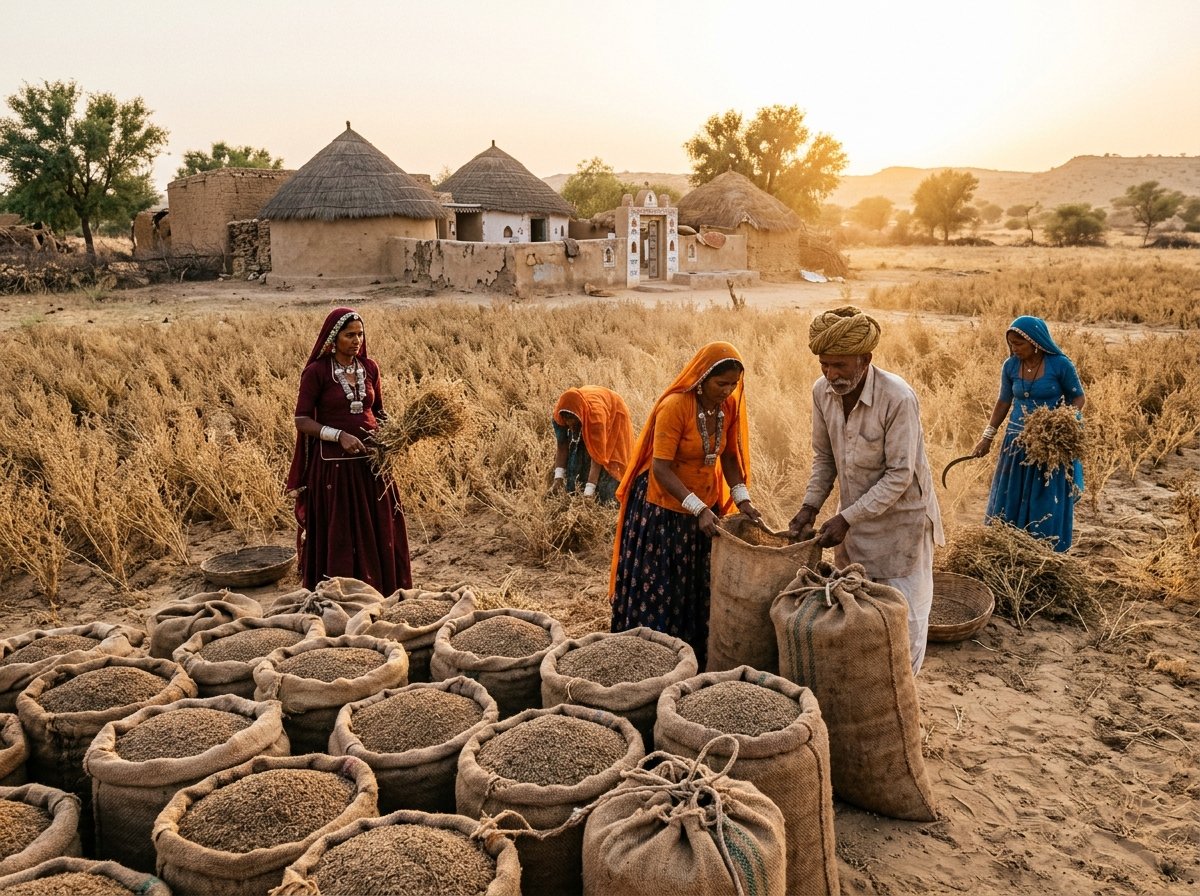
Jodhpur's food tastes of the desert — ker sangri gathered from the scrub, gatte rolled by hand, dal baati eaten with ghee. Jeera is the thread through it: in the tempering of the gatte, in the dal that soaks the baati, in the chaas that cools the meal. When a spice belongs to a cuisine this deeply, buying it whole and fresh is simply how the cuisine is cooked.
Marwar food tastes of the desert, and its tempering is part of that taste — jeera in oil or ghee, opening the gatte, the dal, the ker sangri. Whole seed keeps for months in dry air; powder fades in weeks. That is the logic of this guide. One honest note first — Barmer Jeera is natural farm-procured cumin from Barmer. It is not certified organic, and we do not claim that it is.
2. Jodhpur dishes that love jeera
Gatte ki sabzi is the dish to know: gram-flour rolls simmered in a curd gravy, the gravy built on a tempering of jeera in oil or ghee. Dal baati churma, the festive plate, pairs the baati with a dal finished with a jeera-ghee tadka poured over at serving. Ker sangri, the desert beans and berries, is tempered with jeera too, and mirchi bada — the stuffed green chilli fritter — is served with a jeera-spiced potato filling.
The daily cooking is simpler but no less dependent on the seed: dal with a jeera tadka, aloo sabzi for tiffin, and chaas finished with roasted jeera powder at lunch. In winter, when the city cooks heavier food, families roast a spoonful of jeera on a dry tawa each week and grind it for the week's sabzis and raita — fresh powder, never a stale packet.
3. Storing jeera in Jodhpur climate
Desert air is kind to whole spices. Hot, dry, low humidity — a steel dabba with a tight lid in a shaded cupboard keeps jeera aromatic for months. The only real risks are direct sunlight on a kitchen shelf and steam from the cooker, so keep the jar away from both.
The short monsoon needs a little care, when damp air finds loose lids. Press the lid down after each use during those weeks. In the long dry season, even a kilo stores perfectly well in a good jar.
4. Sizes, prices and the WhatsApp order
| Pack size | Price | Good for |
|---|---|---|
| 100g | ₹60 | Trying it out, or a small household |
| 250g | ₹150 | A month of daily tadkas |
| 500g | ₹300 | Regular family cooking |
| 1kg | ₹600 | Heavy use, or sharing with family |
Courier charges are extra and confirmed on WhatsApp before dispatch.
Send a WhatsApp message to +91 98287 52934 with your pack size and your Jodhpur PIN code, and we will confirm the courier charge before dispatch. Prices are in the table above. Courier charges are extra. Our FSSAI Food Registration No. is 22226007001690, and delivery terms are on our delivery page.
Order Natural Barmer Whole Cumin
Whole cumin from Barmer, Rajasthan, packed in sealed airtight pouches in 100g, 250g, 500g and 1kg sizes. Courier charges extra.
5. A simple everyday use
Temper gatte ki sabzi the Marwar way: heat oil, crackle a teaspoon of whole jeera, then build the curd gravy over it before the gram-flour rolls go in. It is everyday Rajasthani home cooking, not a treatment, and it makes no promise about any health result.
A note: everything here is general food information, not medical advice. Nothing in this article promises any health result, and if you have a health condition, please speak to a doctor before changing your diet.
Frequently Asked Questions
Is Barmer Jeera certified organic?
No. Barmer Jeera is natural farm-procured whole cumin from Barmer, Rajasthan. It is not certified organic, and we do not claim that it is.
How much does organic jeera cost in Jodhpur?
Packs are 100g for ₹60, 250g for ₹150, 500g for ₹300 and 1kg for ₹600. Courier charges are extra and confirmed on WhatsApp before dispatch.
How do I order jeera in Jodhpur?
Message us on WhatsApp at +91 98287 52934 with your pack size and your Jodhpur PIN code. We confirm the courier charge, then pack and dispatch your order by courier.
How should I store jeera in Jodhpur?
Keep it in a steel dabba with a tight lid in a shaded cupboard, away from sun and stove steam, and use a dry spoon. Jodhpur's dry desert air suits whole spices well; in the short monsoon, seal the lid firmly and prefer smaller packs.